
Earning more money can make life more comfortable. A higher salary can help cover bills, provide more choices, and create room for savings. But a larger paycheck does not automatically lead to wealth.
It is possible to earn $100,000 a year and still live paycheck to paycheck. If spending rises every time income increases, there may be little left to save or invest. On the other hand, someone earning less may build a stronger financial position by controlling expenses and consistently setting money aside.
This is where basic accounting principles can help. Understanding income, expenses, cash flow, and what you actually keep can change the way you think about money.
Making more is useful, but building wealth depends on what happens after the money reaches your account.
The Difference Between Income and Wealth
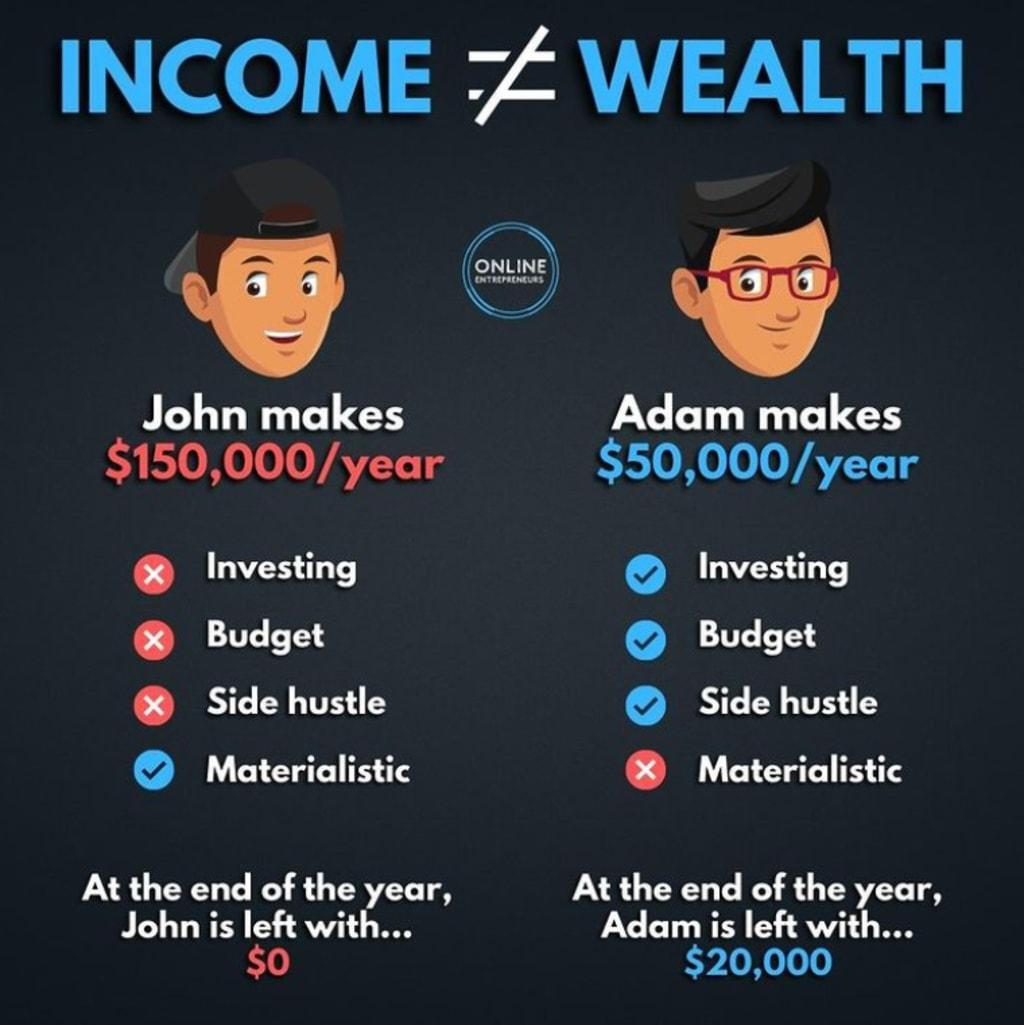
Income and wealth are not the same thing. They measure two different parts of your financial life.
Income is the money you receive over a period of time. Your salary, freelance payments, commissions, business earnings, rental income, and other sources of money can all contribute to your total income.
Wealth is what you build and keep over time. It can include savings, investments, property, business assets, and other assets, minus the debts you owe.
For example, imagine someone earns $8,000 each month but spends $7,800. Despite having a high income, only $200 remains before considering any unexpected costs.
Another person earns $5,000 but spends $3,500. That leaves $1,500 that could be saved, invested, or used to reduce debt.
The higher earner makes $3,000 more each month, but the lower earner has more money available to improve their financial position.
This is why focusing only on salary can give an incomplete picture of financial success. How much you earn matters, but how much you keep and what you do with it matter too.

Why High Earners Can Still Struggle With Money
When income increases, spending often follows.
A promotion may lead to a nicer apartment. A successful year in business might lead to a new car. More disposable income can mean more dining out, travel, subscriptions, shopping, and other recurring expenses.
Over time, expenses that once felt optional can become part of the regular monthly budget.
If someone earns $6,000 per month and spends $5,500, then receives a raise that increases monthly income to $8,000, the additional $2,000 creates an opportunity to improve their finances.
But if monthly spending eventually increases to $7,500, very little has changed. Income went up, but the amount remaining each month stayed at $500.
Debt can make this problem even harder to see. Credit cards, auto loans, personal loans, and other payments can allow someone to maintain an expensive lifestyle even when their income cannot comfortably support it.
A high salary may look impressive from the outside while the person earning it has little savings and large monthly obligations.
Financial progress is not determined by how expensive your lifestyle looks. It comes from creating enough room between what you earn and what you spend to build something for the future.
How Accounting Shows Where Your Money Really Goes
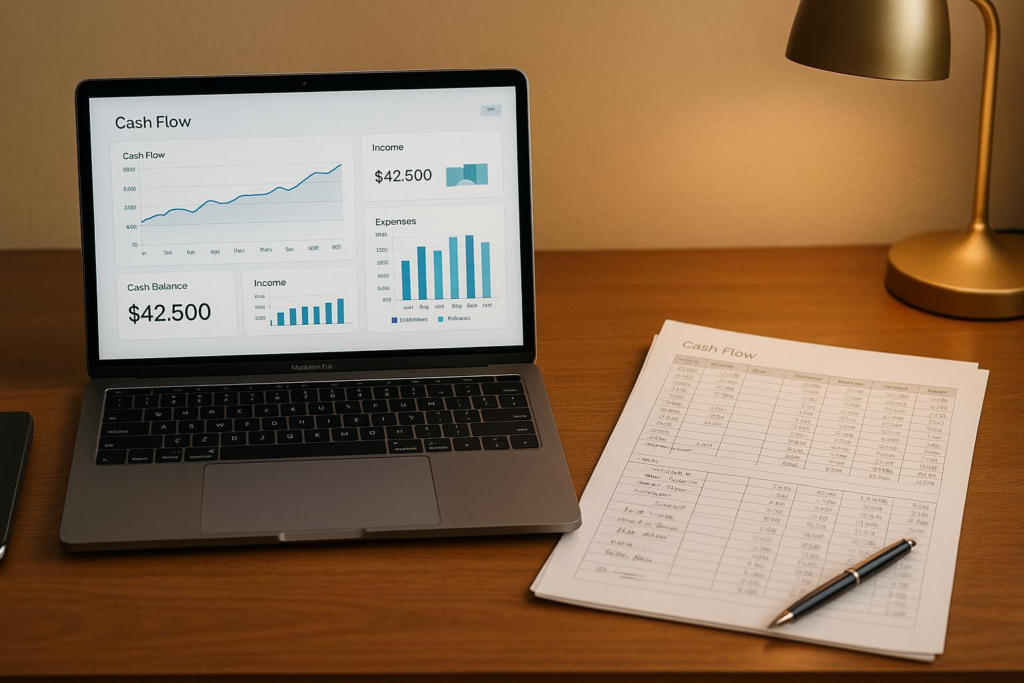
Businesses use accounting to understand what comes in, what goes out, and what remains. The same basic approach can be applied to personal finances.
Start with income. Record money from your job, business, freelance work, rental properties, or other sources.
Then look at expenses. Housing, utilities, transportation, groceries, insurance, subscriptions, debt payments, shopping, entertainment, and other purchases all affect how much of your income remains.
Seeing these numbers together can reveal spending patterns that are difficult to notice when looking at individual transactions.
You might discover that several small subscriptions add up to a large yearly expense. You may notice that dining out costs much more than expected or that an increase in salary was followed by an almost equal increase in spending.
Financial records also make it easier to track cash flow. When more money comes in than goes out, you have positive cash flow. When spending regularly exceeds income, you may need savings or debt to cover the difference.
Instead of asking, “Where did all my money go?” at the end of every month, tracking gives you an answer.
Once you know where your money is going, you can decide where you want it to go next.

Turning Higher Income Into Long-Term Wealth
Increasing your income can be a powerful financial tool when the extra money has a purpose.
Suppose your monthly income increases by $1,500. Rather than immediately adding $1,500 in new monthly expenses, you could direct part of that increase toward savings, investments, debt payments, or another financial goal.
Even if you choose to spend some of the additional income, keeping part of every raise can allow your financial position to grow alongside your earnings.
A budget can help with this by deciding where money will go before it is spent. It does not have to mean cutting out everything you enjoy. It simply creates a plan for balancing current spending with future goals.
Regular financial reviews can also show whether your decisions are working. Compare your income, expenses, savings, debt, and assets over time. If income is rising but savings remain unchanged, that may be a sign that spending is increasing too quickly.
Building wealth usually happens through repeated financial decisions rather than one large paycheck. Increasing income creates more possibilities, but financial control determines how much of that opportunity you keep.
The goal is not to avoid spending or constantly chase a higher salary. It is to understand your numbers and make deliberate choices with the money you have.
More income can give you more options. When paired with financial control, those options can become savings, investments, fewer debts, and a stronger financial future.

Looking for Ready-to-Use Financial Templates
If you’d rather skip building spreadsheets from scratch, check out my Etsy shop for professionally designed budget planners, bookkeeping templates, expense trackers, and business finance tools.
Click Here to Learn High-Income Skills Online Without Spending Money.